Hiển thị các bài đăng có nhãn community service awards. Hiển thị tất cả bài đăng

Thứ Sáu, 11 tháng 5, 2018

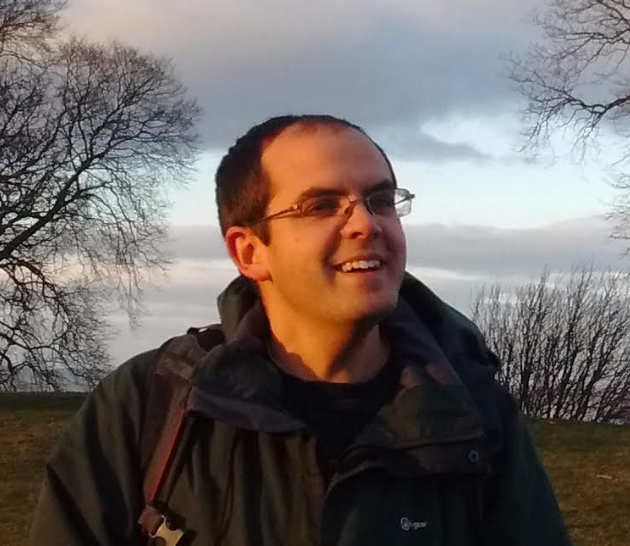
To the Egoless Pythonistas That Makes Space at the Table: A. Jesse Jiryu Davis, Community Service Award Q4 2017 Recipient


When we think of Pythonistas that have made a significant mark in the Python community there are many to consider - Python open source project maintainers, the Python core developers, or the countless Python organizers who bring Python events to new corners of the world. All these Pythonistas demonstrate the dedication and commitment it requires to make Python and the Python community work. Yet there are many whose contributions are at times less apparent, less visible. These Pythonistas are not so much hidden as intentionally working behind the scenes, offering assistance to others, so that they can take the mantle of leadership and make their own mark in the community. In more ways than one, A. Jesse Jiryu Davis has been a mentor and advocate for the community, inspiring many to take that next step in their own Python pursuits. It is for this reason that the Python Software Foundation recognizes A. Jesse Jiryu Davis with a Q4 2017 Community Service Award:


RESOLVED, that the Python Software Foundation award the Q4 2017 Community Service Award to A. Jesse Jiryu Davis for the work he does on the PSF blog, his outreach & education efforts, and for organizing PyGotham 2017.


Coders aren’t good communicators … right?


Our paths into Python are varied, yet there are common themes that bring us to Python. Perhaps your workplace uses Python or perhaps Python was the obvious language to use to solve the problem you were confronted with. For others, though, we arrive at Python because of the rich documentation and friendly community. In his day to day Jesse is a staff engineer at MongoDB. As such, Jesse has written tools for MongoDB like Motor, the async MongoDB Python driver.  In his role Jesse explains, “I’m really lucky, I was hired by an open source software company who encouraged me to become a well known member of Python community by writing and speaking”. Contributing to and maintaining open source also means contributing to the documentation surrounding open source tools. While writing on the tools that Jesse helped create was an entry point into writing, Jesse recognized the unique position he had within his role, “I want[ed] to use this advantage to open up these opportunities to other folks”.


Photo by Barbara Joshin O'Hara.


Jesse actively writes on his personal blog on such topics as Python (and more broadly programming), photography, and zen as well as on several other platforms. In his Python content Jesse has written on advanced concepts like Python’s Global Interpreter Lock to content accessible to programmers of any level like how to begin one’s public speaking career. Crafting accessible and open content has been a way that Jesse has be able to channel his position into learning opportunities for others (for example, see Jesse’s PyCon 2016 talk “Write an Excellent Programming Blog”).


Another location Jesse actively writes in on the Python Software Foundation blog. Part of formerly a team of three bloggers, Jesse has been a blogger for the PSF since early 2016. Often the work on the PSF blog requires individuals to do extensive research and interviews on Pythonistas and communicate critical Python news. On-boarding individuals requires a careful attention to detail and countless hours of review and back and forth as all the work happens remotely in a decentralized fashion. PSF blogger Christy Heaton joined the Python Software Foundation blogging team in late 2016, “I have considered Jesse a mentor since I began blogging for the PSF. When I got my first assignment, and wasn't sure where to start,” she recalls. “Jesse took the time to thoughtfully detail his process for me, in an ego-less and judgement-free way. Now the process is so natural, and I have Jesse to thank for that!”


Sharing the Wealth: Empowering Others to Speak and Share in the Python Community


Jesse’s writing isn’t the only mechanism he’s used to empower others.  One of the open questions Jesse was interested in exploring as a PyGotham 2017 organizer included the question of how to reach more underrepresented folks to submit and speak at PyGotham. Part of this exploration included participating in a PyLadies NYC panel to discuss the CFP process, discuss example submissions, and learn more about what challenges confronting individuals when submitting talks.


The event inspired Jesse to spearhead a unique opportunity for PyGotham -- discover a way for new speakers to have access to professional speaker coaching. “Speaking and writing are side gigs for programmers. We are expected to be good at them, if we are then that’s beneficial for our careers. Often, though, we don’t know what we are doing. There are many writers and speakers outside tech that are highly skilled and underpaid, and we are often overpaid so there is an opportunity to share this wealth,” Jesse explains. Jesse’s own speaking coach, Melissa Collom, is a professional opera singer and Jesse attributes much of his own success in becoming a storyteller, as she has helped him learn how to use his voice and body effectively to make him a compelling speaker. Melissa comments that the “same things that make me an effective performer are the same things that make someone an effective communicator". Therefore when it comes to public speaking Melissa believes that there is a “plurality of excellences, finding the most authentic expression of you means finding what works best for you".


Based upon this belief that there are complementary skill sets in the world and that it’s often by working together that we as individuals can find our “plurality of excellence”, Jesse set about fundraising to ensure that there would be an ability for 11 new PyGotham speakers to have access to a speaking coach. “The thing that stands out to me [about Jesse is he] believes in mentorship and he is a feminist. Jesse believes that women and non-binary people [should] have a place at the table. He is willing to leverage his privilege to help pull some extra chairs up to the table,” Melissa says when describing Jesse.


Additionally Jesse has worked outside of the conference space to help others in developing their pubic speaking careers. “I appreciate Jesse as an educator and mentor in the Python world. His conference talks are educational, engaging, and thought-provoking. Jesse enjoys sharing his knowledge with others and paying it forward. He is a true ally,” former Python Software Foundation Director and PyLadies Remote Organizer Anna Ossowski shares. In February 2018 as a part of the Global Diversity CFP Day PyLadies Remote invited Jesse to share his expertise in and personal journey into public speaking and writing.  “I am thankful for Jesse taking the time to teach PyLadies Remote classes for us, as well as for his help with my talk proposals,” Anna concludes.


We All Have Something to Contribute: What will you contribute?


The theme that emerges time after time when speaking with those that have worked with Jesse is his selflessness and desire to leave more behind than he may take. Director of Python Software Foundation Operations Ewa Jodlowska shares, “I’ve known of Jesse for many years due to his contributions to the Python community. What stands out the most is the willingness to help others.” From his writing, to his speaking, to his mentoring, to his open source projects (that begs us to question our privilege and social location), to his relentless advocacy Jesse demonstrates the richness of the Python community in our shared values of contributing often and freely sharing. That said, we all have something to contribute to the Python community, what will your contribution be?

Thứ Năm, 2 tháng 11, 2017

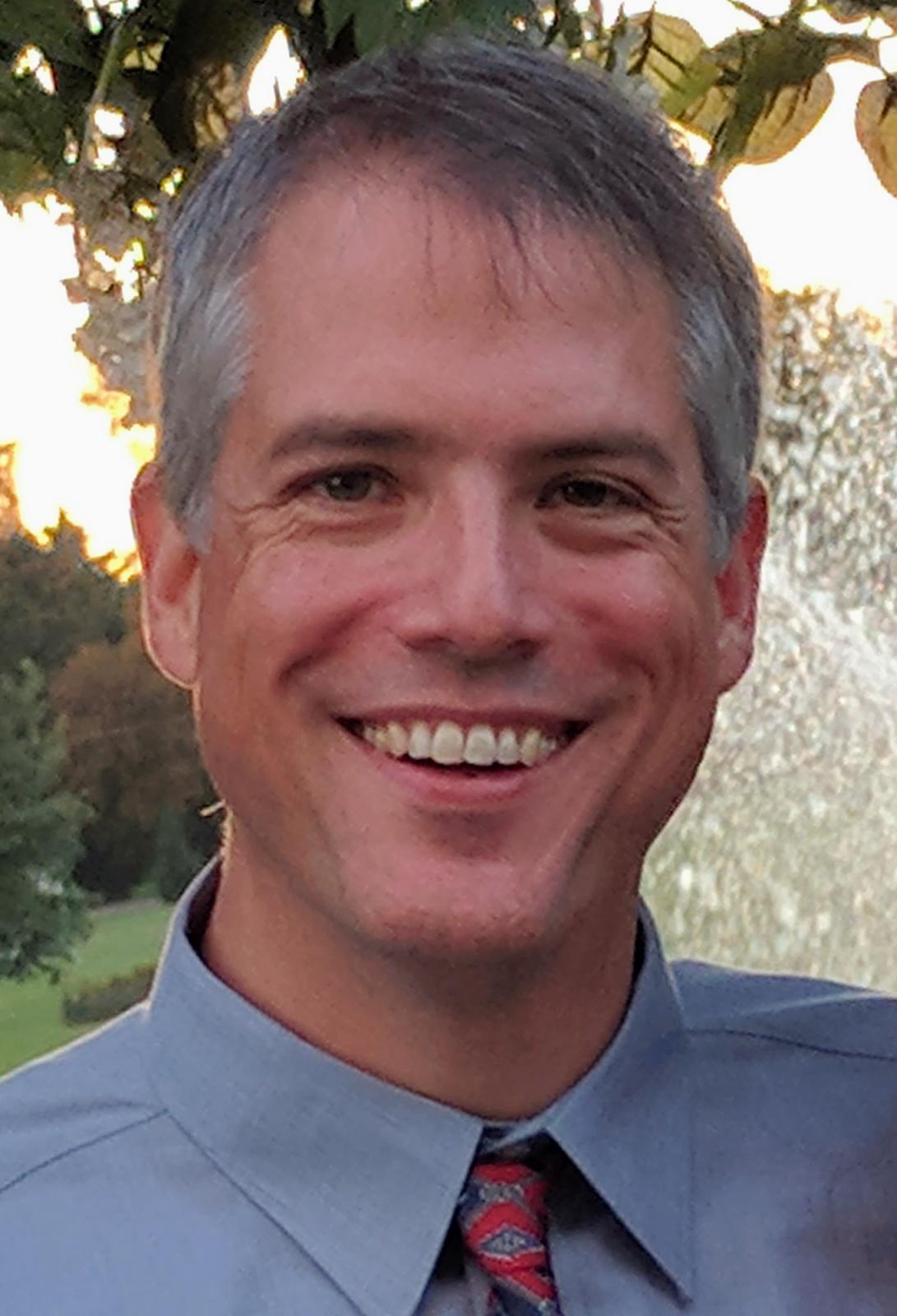
Eric Floehr, Community Service Award 3rd Quarter 2017 Recipient


When Eric Floehr was a child growing up in Ohio, he had three interests: space, dinosaurs, and the weather. One day, his dad brought home a computer to make video games. Eric and his dad worked together copying code from magazines, thus beginning a lifelong interest in programming.


After getting his bachelor's degree in Computer Science at Ohio State, Eric worked as a software engineer, all while nurturing Python hobbies built on his childhood interests. He now works for the company he founded called Intellovations whose primary product is ForecastWatch, a tool that helps weather forecasters be more accurate. Eric has also been a consistent leader in his local Ohio Python community, all while spreading the Python love by encouraging others to get involved and create groups of their own.


The Python Software Foundation has awarded Eric with the Q3 2017 Community Service Award.


RESOLVED, that the Python Software Foundation Q3 2017 Community Service Award be given to Eric Floehr for his work chairing the PyOhio Conference. He is the founder and co-organizer of the Central Ohio Python User Group. COhPy has served as a resource for Python programmers in Columbus, OH. Eric's efforts to "spread Python love" via discussions with leaders of PyNash and IndyPy lead directly to the creation of the annual PyTennessee conference and the Pythology quarterly mini-conferences.


Contributions to the Python Community


PyOhio


While large events like PyCon US are incredibly important for the Python community and bring diverse groups together, it could be argued that smaller groups with more frequent events provide even more benefit. Here attendees are more likely to meet a potential employer/employee, find someone to talk through a problem at work or fun project idea, and socialize with like-minded locals. Eric works from home, which is one of the reasons he enjoys engaging socially with his local Python community. He started by attending PyOhio, a free annual regional Python conference, and quickly wanted to help out. “The first year I helped with pizza, cleanup, and video”, he recalls. By the second year, he was a full-on organizer, “you don’t really need to have any particular skills to organize, just jump in there and do it.”


COhPy


In 2010, when he realized there was no Python group in Columbus, he started The Central Ohio Python User’s Group (COhPy). COhPy hosts meetings once a month where people can listen to talks and chat with local Pythonistas. It also holds networking events and offers other services for the community such as a Slack channel. “Eric's efforts as an organizer of PyOhio and COhPy have given hundreds of Python developers the opportunity to teach and share with thousands of other Python developers”, says Brian Costlow, fellow PyOhio and COhPy organizer, “It gives people the opportunity to grow into speakers and teachers in a small, safe venue, and for many, myself included, to make new and lifelong friends.“ Jason Green, a PyOhio organizer, credits Eric’s gregarious and inclusive nature with his own integration into the Python community. Not only did he welcome Jason to the group, he encouraged him to get involved. “As a leadership mentor, for the last several months,” Jason says, “he has made a point of having me introduce the speakers and welcome new guests.”


Spreading the Python Love


Eric encourages others to get outside of their comfort zone, try new things, and start groups in their own areas. For example, at the PyOhio 2013 conference, Eric put out a call for more regional Python conferences. This struck Jason Myers, a PyOhio attendee, as something that would benefit his Python community in Tennessee. Jason approached Eric with the idea of starting a PyTennessee conference, and Eric immediately offered to help. “Over the course of our first conference planning, call for proposals, and the event itself, Eric was always there with guidance.” Eric’s support didn’t stop there, Jason goes on, “for all four years that I ran PyTennessee, Eric was our best supporter, cheerleader, and advisor.” Jason credits Eric for PyTennessee’s success explaining, “I know without a shadow of a doubt that there would be no PyTennessee without him, and I am eternally grateful for his wisdom, assistance and his friendship.”


Python for Fun


Eric’s love for Python does not end with work and community but is a large part of his hobbies as well. Perhaps his most interesting hobby combines his love of Python and the weather. He set up an old digital camera out his window at home with a Raspberry Pi to take photos every 10 seconds for 3 years. Not only was he able to capture beautiful and dramatic images of weather events, he collected 6 terabytes worth of pictures and metadata that he used Python to analyze in interesting ways. When his analysis was complete in 2015, he gave a fantastic talk on this project at PyOhio.


Time-lapsed images from Eric’s digital camera and raspberry pi


When asked why Python is his language of choice, Eric beams, “Python is a great enabler. It allows people to do more in less time and to build amazing things. From creative works to scientific research, from scratching personal itches, to helping solve critical problems, Python is an incredible tool for growth and exploration. But more than the tool itself,” Eric goes on to say, “it's the community around the tool that I have really fallen in love with. Its focus on inclusivity, tolerance, and respect has been a model for other communities, and it's not only a community I love but one that I'm proud to be a part of.”


What’s next for this Python hobbyist? “Have you seen Westworld?”, he asks. “Like the piano playing by itself in the opening sequence, I’d like to make a mechanical xylophone with 30 keys and 30 hammers that plays itself like a music box.”


Community Service Award Winner Q3 2017 Eric Floehr


Thứ Năm, 12 tháng 10, 2017

Thomas Kluyver, Community Service Award 3rd Quarter 2017 Recipient


People love Python for its ease of use, breadth of modules, and vibrant community. These qualities are made possible by people like Thomas Kluyver who, during the course of his career using Python for scientific research, has identified and implemented various modules, upgrades, and enhancements to Python. He is also an active member of the Python community, attending conferences, participating in his local Python User Group, and contributing his expertise to Python Subreddits.


For these reasons, the Python Software Foundation has awarded Thomas with the Q3 2017 Community Service Award.


RESOLVED, that the Python Software Foundation Q3 2017 Community Service Award be given to Thomas Kluyver for his contributions to the Scientific Python Community. Thomas has also served on many other open source projects and is active on the Python subreddit helping many people in the Python community.


Contributions to Scientific Python


Thomas earned his Ph.D. in plant biology at the University of Sheffield in England. As a scientist, Thomas’ interest in programming stemmed from childhood where he learned QBasic with support from his father. During his Ph.D. program, Thomas became a regular contributor to Jupyter/IPython, working single-handedly to port it from Python 2 to Python 3. This caught the attention of Fernando Pérez, creator of IPython and co-founder of Project Jupyter, who just happened to be looking for a post-doc. “Given his amazing contributions even while he was still a student,” says Fernando, “I was looking for an opportunity to engage him more with the project.” Thomas accepted the offer to work with Fernando at UC Berkeley developing IPython and open source tools for science. Looking back Thomas recalls, “it was a great opportunity for me.” Thomas stayed at Berkeley for 2 years before returning to England for a position at the University of Southampton. There he continues to work on Jupyter and IPython and is also involved in the NGCM Summer Academy, teaching scientists a variety of computational skills in Python.


Contributions to Other Open Source Projects


Thomas has worked on a number of tools outside of his profession as well, such as Flit. Flit is a packaging tool which aims to make it simpler to publish your Python code on PyPI. This tool and the concepts it presents have led to discussions about standard interfaces for different packaging tools to work together better, documented in PEP 517 and 518. Nick Coghlan, a CPython core developer who has worked with Thomas in his efforts to help move the Python packaging ecosystem forward, characterizes Thomas contributions to Flit as “rather than just writing it as a standalone tool, Thomas worked hard to ensure that the underlying interoperability standards also evolved to make it easier to write tools like Flit, and that such tools integrate nicely with frontend installation tools like pip.”


Distributing applications to end users is still a weak point for Python, whereas distributing libraries and developer tools have become better equipped to handle this challenge in recent years. That is why Thomas built Pynsist, a tool to build Windows installers for Python applications. Pynsist can even build a Windows installer from a Linux system, which builds on the work of other projects like NSIS. Fernando says, “considering that Thomas is mostly a Linux user, this is a great example of how he does work that has great value to the Python community even beyond his immediate needs.”


Contributions to the Python Community


Thomas is a regular speaker at Python events around the world such as SciPy, PyData, EuroSciPy, and PyCon conferences. He is also involved in his local Southampton Python User Group. “Basically he's all over the community,” says Fernando, “helping others on the mailing lists, working on IPython/Jupyter, building multiple tools of great value to many, and teaching across a variety of spaces.” Fellow Jupyter/IPython developer and Flit collaborator Matthias Bussonnier agrees saying, “Thomas has always cared a lot about community and has spent hours teaching new contributors how to do things, even if it would take him less time to do them himself.”


Why Python?


Working on the Black Python

When asked why Python is his language of choice, Thomas explains, “It's a beginners language, but it's also a language that many experienced programmers are using to solve real problems. I also like the breadth of domains in which Python is used and the strong open source ethos in the community around Python.”


As if Thomas has yet to prove the full breadth of Python’s domains, Thomas recently participated in the World Robotic Sailing Competition. His team entered in their model sailboat, named the Black Python, which carries a Raspberry Pi to control the sails and the rudder. The Black Python took first place in the 'micro sailboat' class both this year and last. Read more about this project on their blog.


Despite these significant accomplishments, Thomas recognizes the support he has gotten over the years recalling, “I've benefited immensely from other people: from my father helping me to learn programming, to the IPython team welcoming me and bringing me into the scientific Python community, to the thousands of programmers whose open source code I've used.”


Community Service Award Winner 2017Q3 Thomas Kluyver


Thứ Hai, 25 tháng 9, 2017

The PyLady Behind PyLadies: Lynn Root, Community Service Award 2nd Quarter 2017 Recipient


PyLadies is an international mentorship community for women that use Python. Started with a grant in 2011, PyLadies has continued to bring women into the Python community through a variety of methods, including hosting events in local PyLadies chapters as well as offering a grant opportunity to attend PyCon. One woman in particular has contributed to PyLadies' success, for which the PSF recognized her as a Community Service Award recipient for the 2nd Quarter of 2017:


RESOLVED, that the Python Software Foundation Q2 2017 Community Service Award to Lynn Root for her work as the founder of the San Francisco Chapter of PyLadies, a member of the Django Software Foundation, and as a tireless volunteer at PyCon.


PyLadies in the early days, the Start of the San Francisco Chapter


If you can name one person associated with PyLadies, it is Lynn Root. Lynn’s relentless support, organizing, and evangelizing on behalf of PyLadies is known by many. “Lynn’s enthusiasm and passion for bringing more women into tech are well complemented by her organizational skills, which were especially needed at pivotal moment in early PyLadies history. Lynn helped grow PyLadies into, what is now, a global organization that’s had a huge impact on the Python community,” PyLady Esther Nam, one of the founders of the PyLadies Los Angeles chapter, explains.


In late 2011, Lynn began learning to program, as some of graduate programs she was considering required her to have some programming expertise. “I reached out to San Francisco’s Women Who Code to organize a Python study group,” Lynn recalls, trying to find like-minded women to join. She had used Python in a weekend hackathon and found it to be a beginner friendly language. The following year, in 2012, PyCon was held in Santa Clara.  “Lynn reached out and organized a carpool of Bay Area Pythonistas to attend the conference”, Esther remembers. PyLadies from the first chapter in Los Angeles attended, where Lynn met with them to learn more about PyLadies.  The next month, she founded the San Francisco chapter. Lynn continued to act as a principal organizer for PyLadies San Francisco for the next four years.


Growing PyLadies in the Global Community


Overlapping with her time as PyLadies San Francisco lead organizer, Lynn championed other significant projects including the creation of `pip install pyladies`, the PyLadies open source kit for new organizers. The development of open source tools for PyLadies has been instrumental in getting the word out about PyLadies. Lynn was able to use these tools to help start international PyLadies communities in Stockholm, Zagreb, and Brno.


Lynn also took an active role in bringing PyLadies content to PyCon. During Lynn’s first term on the Python Software Foundation Board of Directors in 2013 to 2014, Lynn helped plan and run the first PyLadies Charity Auction at PyCon. Months of work go into organizing the charity auction; it requires donations to be procured beforehand, besides auctioneering on-site. The inaugural PyLadies Charity Auction raised $10,000.00 USD for PyLadies. Commenting in a 2013 press release about the auction, Atlanta PyLadies founder Laura Cassell explains, “we're all so resourceful already that I suspect this money is going to go a long way towards helping women who want to get into the industry. I'm still a little misty-eyed at the whole thing, to be honest."


Besides her PyLadies work, Lynn has been a speaker at PyCon four times, PyCon Lightning Talk Chair since 2014, frequent session runner, and recurring PyCon volunteer.


PyLadies Benevolent Dictator for Life?


I asked Lynn if she has ever been called the PyLadies Benevolent Dictator for Life (BDFL).  Lynn shook her head, she does not see herself in that fashion. But it is hard to refute the strong footprint she has left on the PyLadies community. Lynn has written several Python open source tutorials, like the web scraping with scrapy and postgres, that are often used in PyLadies workshops and are highly visited (over 65,000 times to date this year!), and has spoken at PyCons around the world: EuroPython, PyCon Finland, and PyCon Brasil. Lynn was the original PyLady I consulted with when starting the PyLadies Chicago chapter in 2014.


From founding her local PyLadies chapter, to volunteering at PyCon, to catalyzing other initiatives like the Django Software Foundation, Lynn has been an unwavering advocate for women in the Python community and for the broader Python community itself. The thing that Lynn says has been most satisfying for her as a Python community organizer and advocate has been the rise of women in Python. “In 2012 only 8% of speakers at PyCon were women now in 2017 we have approximately 33%”.


With the rise of PyLadies at PyCon and throughout the world, it’ll be exciting to see what comes next for the PyLadies community and for those that have helped make PyLadies such a tremendous success.


Thứ Năm, 10 tháng 8, 2017

The Ethical Maintainer: Community Service Award Recipient Glyph Lefkowitz


Glyph Lefkowitz was barely 20 years old when he promised himself, "I am never going to use a proprietary programming language again!" He had been writing a Java application for his first professional programming job, which he had started directly after high school. The firm was a mom and pop shop that sold inventory software. Glyph was hired to rewrite their application for a contemporary platform: Java's Abstract Window Toolkit. With the hubris of the young, he promised, "Sure, I can rewrite your whole application in a new language." He could do it working only four days a week, too, and make time to work on his multiplayer online game.


"I had a pretty terrible experience with Java," he says. In those early days of the Java AWT, on classic Mac OS it leaked a tiny bit of memory every time it opened and closed a window, and in his application, nearly every task a user desired required opening and closing a window. On the constrained Macs of the time, the application would crash after about 100 tasks, often taking the whole OS down with it. The AWT was proprietary, so there was no way to fix the bug himself. "I was fired," says Glyph, "because I was having a nervous breakdown over this."


The Birth of Twisted


Meanwhile, Glyph was also building his multi-user text adventure in Java. He wanted to rapidly experiment with varied gameplay logic, and to avoid constantly restarting the server as he tried new code, he built a system in Java that could load new modules at runtime. When, burned by his Java defeat, he switched to Python, he found that practically all of the Java code required to load modules and execute them simply disappeared.


The switch from Java to Python had another effect, which profoundly determined the direction of Glyph's career. He discovered async.


Glyph's friend James Knight, who would become an original contributor to Twisted, helped with the Python port. The initial code for the Python server ran a thread per player, but Knight used a select call to determine, within each thread, whether it was time to read a message from the player or send one. When young Glyph saw that code he was astonished. "It's doing two things at once! But it's also kind of one thing." After all the bugs he'd battled in his multithreaded Java, he thought, "Couldn't we just do one thing all the time?" He and Knight rewrote the entire game server as a single-threaded event loop. He liked how it simplified the code. Only one thread accessed a shared data structure at a time. His original motivation to use an event loop was not efficiency: rather, it was how much easier it was to make his code correct.


Glyph says that his strength, in his 20s, was knowing what he didn't know. His father is a programmer, and he taught Glyph that most programming techniques are already well-known. Therefore when Glyph and James Knight got their event loop working, Glyph thought, "Someone must have done this before." He searched on Alta Vista and found the ACE project, which included a C++ event loop. Glyph refined his Python event loop based on the best practices he found in ACE, and this became the basis for Twisted, which is now one of the oldest and most influential of all Python libraries.


Based on this early experience discovering that event loops were a well-known technique, Twisted's motto is "no new ideas allowed." Twenty years later, however, Glyph has begun to innovate on the margins. For example, his Tubes library implements asynchronous I/O as "flows" of data with flow control and backpressure. But when it comes to event loops, he says, "There's so much prior art that coming up with new inventions is not worthwhile."


Twisted's Influence On Python


In the second quarter of 2017, the Python Software Foundation recognized Glyph Lefkowitz with a Community Service Award for his work on Twisted and his contributions to the Python community. Nick Coghlan nominated him, saying that Twisted "predates almost all other Python event handling systems by years, and still has by far the most comprehensive set of network protocol handlers." The decade-long journey from PEP 342's generators-as-coroutines, which enabled Twisted's inlineCallbacks feature and Tornado's Futures, to native coroutine support with "async" and "await", began with Twisted. Coghlan says that evolution could be reasonably described as taking the concepts first embodied in Twisted and drawing them ever closer to the center of the language.


In 2012, Guido van Rossum began writing asyncio, an async framework for the Python standard library. He collaborated closely with Glyph, as well as Tornado's maintainer Ben Darnell, to incorporate their best ideas in asyncio. He was interested in Twisted's notion of a Deferred, but he couldn't seem to understand it. Glyph says that trying to explain Deferred to Guido "was the worst time I've ever had on a mailing list." Guido wrote, "I really don't get Deferreds. Don't bother pointing me to docs or tutorials; I tried and failed." He said that Glyph's "snarky tone is seriously affecting my ability to process your response." Then he went silent for a week.


Glyph was devastated. He felt like he'd been flamed and ghosted by the founder of the language itself. Then Guido suddenly returned to the mailing list, with what Glyph calls "the most trenchant and keenly observed critique of the Deferred module. It was possibly the best code review I've ever received." It was suddenly clear that Twisted's Deferred would interoperate just fine with the new asyncio event loop. "We were all on board."


Responsibilities of Open Source Programmers


Glyph is distinct among Python programmers for his outspoken views on ethics. In his 2015 PyCon talk he proposed that programmers write a code of ethics, similar to other professions such as medicine and journalism. If we don't, he says, "someone else is going to do it for us, and they are not going to understand our field well enough to do it correctly." Since software is eating the world and it influences nearly all economic activity, we have a grave obligation to write code ethically.


Open source programmers often think we owe our users nothing, because we give away code for free. But this attitude ignores the benefits that we've gained. "Being an open source maintainer has opened all sorts of doors for me," says Glyph. "Whenever anyone does anything with Twisted the credit accrues to me. That's not really accurate, because there are lots of other maintainers like Amber Brown, David Reid, Ashwini Oruganti, Jean-Paul Calderone, Moshe Zadka, and Christopher Armstrong." Regardless, anyone who releases open source code engages in a subtle exchange with users, which obliges the coder to uphold some responsibilities. In my conversation with him, Glyph identified three responsibilities for open source programmers: to make clear promises, to secure our code, and to release code of appropriate quality.


Open source maintainers are uniquely obliged to make clear promises. If a maintainer abandons a project, her main obligation is to announce her departure and to transfer control. "Being an open-source maintainer is not a life sentence," says Glyph. But it is irresponsible to make a worthy piece of software, gain users, then disappear without a word.


We also have a responsibility to protect our personal information security; for example, a Python project maintainer must protect her PyPI account so her users know they won't be hacked when they install her package. That responsibility is shared with the community's infrastructure maintainers, and Glyph cites PyPI as one of the best modern examples. "It doesn't get enough credit because of Python's checkered history with packaging," he says, "but the way Donald Stufft thinks about practical information security, and the other folks who work on PyPI as well, and the resources the PSF has invested there," have laid a foundation for securely distributing open source Python.


And finally, many of us set a low bar for the quality of code that we release: if the project scratched our own itch, we might as well open-source it. In Glyph's opinion, we must more carefully consider the impact of the code we give away, because we can't predict how it will be used. Glyph knows that many of the largest sites run Twisted somewhere in their stack, and he feels the responsibility keenly.


"A lot of our software completely escapes its originating context," says Glyph. The author might intend to release a mere prototype, but downstream packagers come to depend on her code, and other programmers even farther downstream might not know they depend on it at all. Of course, software users share some responsibility for auditing what code they use. "This responsibility is not black or white," says Glyph. "There's small tradeoffs and fractional proportions. It's not 100% yours or not, but you've got to think about it."

Thứ Hai, 4 tháng 4, 2016

"I Found My Secret Calling As An Auctioneer": Community Service Award Recipient Jacqueline Kazil

When a pair of cufflinks in the shape of the Python logo sold for $900, Jacqueline Kazil thought, "We're on to something." The cufflinks were the most coveted item of the PyLadies Auction at PyCon in 2014. So the next year Kazil made a pair of Python socks—"2015 was the year of the sock, in fashion"—and a Python tie. The socks sold for $550. The tie sold for $600 to Jacob Kaplan-Moss, the Django contributor. He tweeted:


Kazil had begun volunteering with the auction in 2013, "at the last minute." By 2015 she stepped up to help collect items and auction them. Her fellow auction coordinator, Lynn Root, says, "She came in and just like, did shit. She was completely on the ball and accomplished what needed to be done."


The thousands of dollars PyLadies raises from the annual auction is spent on scholarships to send women to PyCon. "It lowers the barrier for women to attend," says Kazil. "Not everybody has a company supporting them. I remember when I was working for the government there wasn't that money allocated for sending folks to conferences."


Jackie Kazil is a 2016 recipient of the Python Software Foundation Community Service Award. The Foundation recognizes her contribution to the PyCon PyLadies Auction, and her diligent volunteer effort as chair of the PSF Grants Work Group.


Jackie Kazil


The Grants Work Group ensures that small grant applications are processed promptly in the periods between PSF Board meetings. "We make sure that grants keep flowing," Kazil says. The group also provides diverse perspectives of applications. "Our members are from around the world, and that ensures we have input about cultural factors, costs that we wouldn't think of if we didn't have this global view."


According to Lynn Root, "Jackie is a very genuine and true person who really acts on her passions." Acting on her passions has paid off in a prestigious career: She is president of the board of the Presidential Innovation Fellows Foundation, wrote the Mesa agent-based modeling framework, is a Technical Fellow at Capital One, and recently co-authored with Katharine Jarmul the O'Reilly book Data Wrangling with Python. Kazil says, "Each feeds a different part of what I think is important. The book was created for data people or statisticians who want to learn how to code. The two authors and two editors and two target-audience reviewers were women which I think is kind of cool."


With her Mesa project, Kazil aims to consolidate agent-based modeling techniques in a reusable Python framework. "It's a type of modeling where you have so many independent variables in the system that it would take until the end of time to solve." Mesa also enables researchers to publish browser-based visualizations of their results. "It makes the models reproducible. For example economists and sociologists come from different schools of thought, but if they can 'pip install' something they can work with the same baseline model. Once that baseline is created and accepted, they have the same starting point."


In January Kazil joined Capital One as a member of the Technical Fellows program, where she mentors, teaches, and cultivates the company's engineering culture. She works with Jim Jagielski, co-founder of the Apache Software Foundation and a Distinguished Engineer in the Tech Fellows program, helping to open-source projects from the company. “There's increased focus on open source in the private sector," she says. "You might think, why would I want to go to a bank? But there's a lot of awesome things to work on here."


Despite her accomplishments as a software engineer, Kazil's enthusiasm for the PyLadies auction is undiminished. "I love love love the event. There was a joke going around about how I had found my secret calling. I should be an auctioneer."

Thứ Hai, 28 tháng 3, 2016

"A Genuinely Nice Chap": Community Service Award Recipient Damien George

"We wouldn't have Python on the micro:bit if he hadn't made it work, to put it simply," Nicholas Tollervey says. He's talking about Damien George, the physicist and engineer behind MicroPython, the Python interpreter for microcontrollers.


George began his project to build a Python interpreter for microcontrollers in 2013. "I started writing MicroPython to see if it's possible," he says. "Could I shrink Python down small enough to run on these tiny chips?" From scratch, he made a Python compiler so skinny it could squeeze into 128 kilobytes of RAM, and then wrote the runtime and built-in functions. "After about 6 months I realized it was possible, and I had a proof of concept."


Damien George, PSF Community Service Award recipient

Surprisingly, MicroPython is based not on the CPython code, but on the documentation. "I tried to look as little as possible at CPython's implementation," he says. "I'd say 95% of the Python language is specified in the docs, maybe even more."


George launched the MicroPython campaign on Kickstarter at the end of 2013, and raised nearly £100,000. With the support of donors and the efforts of volunteers, he released MicroPython along with a small computer, the PyBoard, which packs a processor, RAM, LEDs, and an accelerometer into a package less than two inches square.


The MicroPython PyBoard

The BBC, meanwhile, wanted to port Python to its own little computer, the micro:bit. They partnered with the Python Software Foundation and worked with Tollervey, a PSF fellow, to obtain a Python interpreter for their secret project. That effort fell through in April 2015, leaving Tollervey anxious that Python would be left out of the micro:bit launch. Young coders can program the micro:bit with another tool, Microsoft's TouchDevelop, but Tollervey says that Python on the micro:bit provides a special opportunity: "The important thing about Python is continuity. Kids can pick up Python because it's easy to learn, and it's also the same language you use at the workplace. These are skills they can use in the future."


By chance, in a discussion over tea with an engineer from ARM, Tollervey realized MicroPython might work on the micro:bit. He sent a prototype of the board to George with a note stuck to it: "I want this back, Damien," and a smiley face. Within a week of getting the prototype, George had MicroPython running on it. Tollervey says, "When we had that I knew we were on to a goer." He did eventually get his board back.


The Python Software Foundation awarded Damien George a Community Service Award in 2016. In addition to his extensive volunteer work on the BBC micro:bit and MicroPython, George spent time answering questions, helping users, and reviewing code from the wider MicroPython and micro:bit communities. Tollervey adds, "He's a very good mentor, and just a genuinely nice chap."


Now that the micro:bit is launched, MicroPython is gaining a far wider audience. Last Tuesday the BBC began delivering micro:bits to a million school children. George says, "It's a relief that it's finally out there, and very exciting to see this new era of kids using Python on these little devices."


The BBC micro:bit


Thứ Tư, 13 tháng 1, 2016

2015 Community Service Award goes to Berker Peksağ


Last month I posted about the wonderful work of Terri Oda, who was recognized with a Community Service Award. Today’s post is about another 2015 Fourth Quarter CSA recipient, Berker Peksağ, who will be receiving a Community Service Award  … for his consistent volunteer efforts with pydotorg in 2015 (see Resolutions).


As many of you know, pydotorg has been undergoing renovation for a long time now. It has been, and continues to be, a labor of love involving many people (the Python infrastructure team, Marc-André Lemburg, and Benjamin Peterson, to name just a few). Still, the work done by Berker over the past year has been remarkable, resulting in significant improvement to the site and to users' experience. 


His contributions in 2015 include:


  • Helping get the second redesign working on the staging website


  • Working on the new job board with Marc-André Lemburg


  • Helping fix bugs on python.org (e.g., corrections to URLS for Python downloads; scrolling issues on landing pages and PEPs)


  • Making sure the site uses an up-to-date version of Django


  • Committing code to improve the user experience (e.g., adding a feature for updating board minutes on the site; making a change so broken images would not appear; updating the members' section to allow members to edit their profiles, and non-members to sign up; updating membership using django-admin so staff can download member files; updating the PEP RSS feed; updating Open Graph protocol on the website


  • Updating contributor documentation describing how to install the GitHub repo and how to contribute to the site


  • Improving the contributor experience (e.g., by switching from Chef configuration to Ansible)


  • Reviewing and merging community pull requests


  • Cleaning-up code


Wondering how Berker came to make so many awesome contributions, I asked him about himself and learned the following:


Berker is a software developer, living in Istanbul, Turkey, who first started learning Python in 2010. At the time he had been engaged in web development for over five years, but within a year of learning Python he built his first non-trivial Python project with a friend. 


Desiring to become more active in Python, Berker discovered pythonmentors.com in late 2011. This discovery gave him the courage and support to contribute to CPython. As he tells it: 


"I still don’t know what I was thinking since I [didn’t] even know enough Python at that moment :). I don’t remember all the names, but Antoine Pitrou, Brett Cannon, Éric Araujo and R. David Murray were really helpful. Brett also merged my first patch to CPython in early 2012."


Berker's enthusiasm and skills increased, and by 2014, he had become a core developer. Today he works as a Python consultant in Istanbul.


I  asked Berker what more needs to be done on pydotorg, and he replied 


"Our stack is little bit outdated (Python 3.3 and Django 1.7), and we have a few blockers before switching to the latest releases of Python and Django. We also need to improve community contributions. I have a few ideas, but I couldn’t find enough time to work on them."


So here’s an opportunity for those of you who would like to help!  And for everyone, please join me in congratulating Berker on his well-deserved award and in thanking him for his contributions to our community.


I would love to hear from readers. Please send feedback, comments, or blog ideas to me at msushi@gnosis.cx.


Thứ Sáu, 11 tháng 12, 2015

Google Summer of Code–Terri Oda gets CSA award!


At the latest PSF Board of Directors' meeting, it was decided that a 4th quarter Community Service Award will go to Terri Oda for her work as the Python Coordinator for Google Summer of Code. 


Terri Oda


For those of you unfamiliar with GSoC, it is a program that began in 2005 that allows students to be paid to work on open source projects over the summer. Their motto is Flip bits, not burgers. The students must apply to the program and are then matched up with a mentor from one of the many sponsoring organizations. The PSF has been proud to be a sponsoring organization since 2005. Thus far, there have been over 8,500 students from over 100 countries and over 8,300 mentors from over 109 countries who have participated in GSoC.


According to their website, the program, in addition to the $5,500 USD stipend, offers students 


exposure to real-world software development scenarios and the opportunity for employment in areas related to their academic pursuits. In turn, the participating projects are able to more easily identify and bring in new developers. Best of all, more source code is created and released for the use and benefit of all.


In fact, the program has so far produced more than 50 million lines of open source code!  


Prior to becoming the PSF's administrator, Terri had worked as a mentor for Mailman, the GNU mailing list manager written in Python, and for Systers, an email forum for women in computing. Nonetheless, when she took over GSoC in 2013, she found the ramp-up to such a huge responsibility to be terrifying. That year, the Python umbrella organization included 19 sub-orgs, 87 mentors, and 36 students selected from over 100 applicants. For this year, the summer of 2015, there were more than 70 students who worked on Python projects with the help of over 100 Python mentors.


Fortunately Terri is not alone: 


… my co-admin Meflin [James Lopeman] takes on a huge amount of work when it comes to getting ideas pages set up, and my [other] co-admins [including Florian Fuchs, Kushal Das, and Stephen Turnbull] help out where they can too. (And we're always looking for more help!)


Terri and some of the Python Mentors


I asked Terri if she could tell us about any of her students.


“I’ve had some amazing students over the years, but there’s one who really stands out for me right now: Abhilash Raj. Not only did he do interesting work during his GSoC summer, but he also has become a hugely valuable community member for Mailman, working on continuous integration, contributions, and mentoring. We convinced him to let us fly him from India to Montreal so that he could attend the PyCon sprints last year, and it was really awesome to finally meet him in person! He’s been a real catalyst to keep Mailman development moving over the past two years, and it’s a real treat to have him as part of the Mailman team!”


Although Terri laments the fact that, as administrator, she has less time to work one-on-one with the students, she is able to keep informed via the student blog posts. One of Terri’s favorite posts 


was from the bravest student I’ve ever seen: she talked about how, upon getting commit access to her project’s repo, she did the thing that everyone fears: she accidentally trashed it. Most students wouldn’t even want to admit that, let alone write a blog post about it, but she was great and wrote a post not only about making the mistake, but about how she learned to fix it. Every time I think that I’ve made an embarrassing commit, I think about her bravery and honesty as inspiration for how to recover gracefully. 


Terri loves the fact that the GSoC gives students a way into open source, but she likes to point out that it’s not the only way. She herself got involved in open source as a teenager, then with the help of a friend, she was able to find a rewarding job as a security researcher for Intel’s Open Source Technology Center. So she advises her students that there are numerous paths to take.


My very first contribution to Mailman was actually a tiny image, not code at all! GSoC is a great program, but you don’t have to wait for the well-known path to be open; you can always blaze your own. Or sneak in the back. ;)


To read more about Google Summer of Code and the many terrific student projects, see: 


The PSF wishes to thank and congratulate Terri, the other PSF admins, and all those who make GSoC such a terrific program. We also urge participation – if you’d like to become a mentor, or have project ideas, please contact Terri (terri on Freenode IRC, terrioda at gmail.com).


I would love to hear from readers. Please send feedback, comments, or blog ideas to me at msushi@gnosis.cx.


Popular Posts

Magix Vegas Pro 17.0.0.452 Free Download Magix Vegas Pro 17.0.0.452 Free Download includes all the necessary files to run perfectly on your ...